

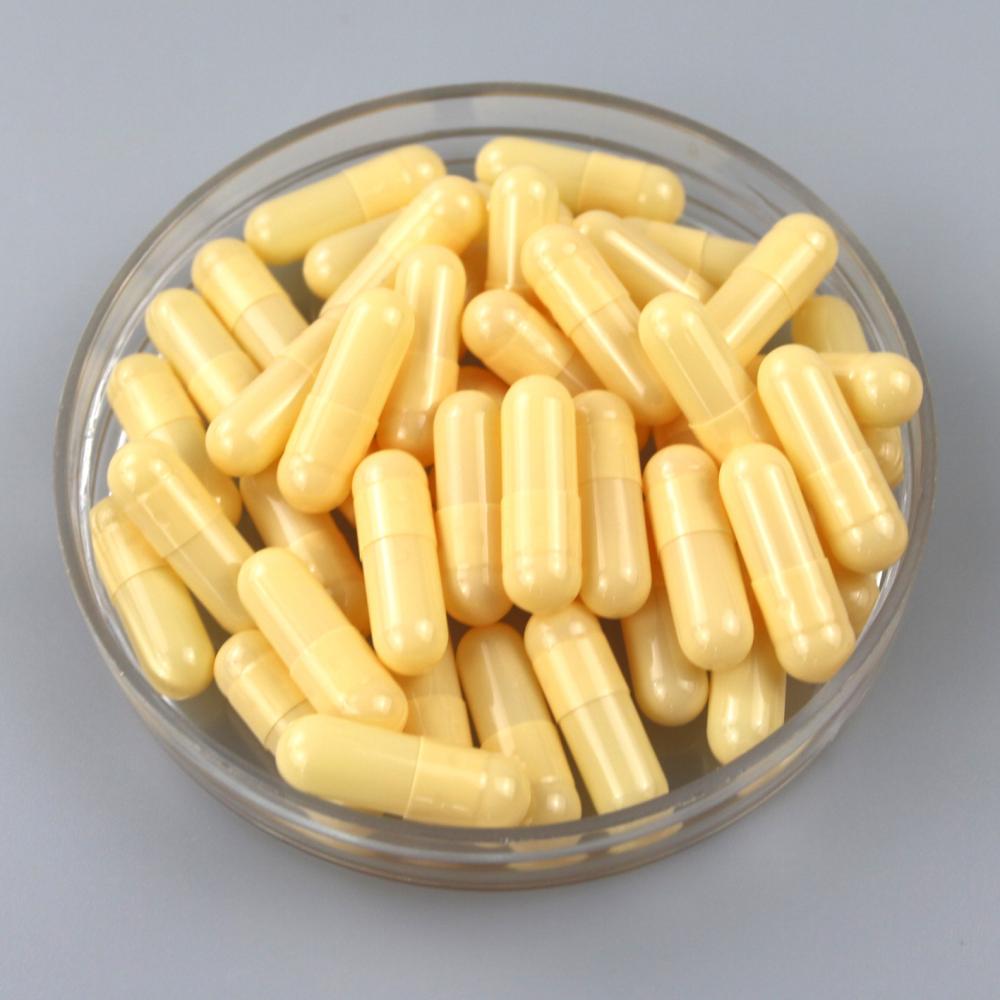
The global empty capsule market is showing a steady growth trend. The market size of empty capsules for medical use will reach US$2.9 billion in 2023 and is expected to climb to US$3.9 billion in 2030, with a compound annual growth rate (CAGR) of 4.6%. The growth rate of the Chinese market is particularly impressive, reaching RMB 7.31 billion in 2022, and the demand is expected to exceed 638.94 billion capsules in 2025, a year-on-year increase of 6.4%. In the regional demand pattern, the Asia-Pacific region accounts for 35%, Europe and the Americas account for 32% and 28% respectively. As the core production area of Asia-Pacific, China ranks among the top in the world in terms of production and export volume.
Technological Innovation: Double Breakthrough of Plant-Based and Intelligentization
1. Explosive Growth of Plant-Based Capsules
Plant-based empty capsules have become the new favorite of the market with their natural ingredients and environmentally friendly properties. Data shows that in 2023, the sales of plant capsules surged 1000% year-on-year, and the global market size is expected to reach US$1.585 billion in 2026 (CAGR 7.6%). Consumers' preference for its taste, convenience and health attributes has driven the rapid rise of this segment.
Case: Erkang Pharmaceutical Starch Plant Capsules rely on technological innovation to achieve large-scale application in the field of health products, which meets the market's demand for natural sources.
2. Intelligent production leads the efficiency revolution
Dongbao Bio's "New Hollow Capsule Intelligent Industrialization Project" has been fully put into production, with an annual production capacity of 70 billion capsules. Through highly automated and intelligent equipment, precise control of the production process is achieved. This project not only consolidates its leading position in China, but also promotes industry upgrading with technical benchmarks.
Environmental protection and quality: industrial upgrading under dual requirements
1. Stricter production standards
GMP workshops must meet 100,000-level cleanliness and precise temperature and humidity control (production environment 18-25℃, 45-65% humidity; storage conditions 10-25℃, 35-65% humidity) to ensure capsule stability. Some leading companies have introduced IoT technology to monitor environmental parameters in real time and reduce quality risks.
2. Full-chain quality control
From raw material procurement to finished product release, the quality management system covers the entire process. Medicinal gelatin capsules need to pass appearance, physical and chemical properties, microbial limits and other tests. Some companies have introduced AI visual inspection to increase the defect recognition rate to 99.9%.
Future trends: policy and technology dual-wheel drive
1. Policy orientation
The drug procurement and consistency evaluation policies force companies to improve quality, and stricter environmental protection supervision prompts the production process to transform to low carbon. For example, some manufacturers use degradable materials to replace traditional gelatin to respond to the carbon neutrality goal.
2. Technology integration
The Internet of Things and intelligent diagnostic technologies will be deeply integrated into the production of empty capsules. For example, in the "Metafluid" metamaterial developed by Harvard, the elastic hollow capsule adjusts the fluid properties through pressure response, providing a new solution for the drug sustained release system.

Conclusion
The empty capsule industry is standing at the intersection of technology iteration and green transformation. The explosion of plant-based materials, the popularization of intelligent production and the upgrading of quality standards will jointly drive the market towards higher quality and more sustainable development. In the future, companies with technological innovation and environmental protection layout will gain an advantage in global competition.